News Story
A significant new report on artificial intelligence suggests that the current level of debate around the rapidly developing technology must be improved.
The report was produced by the University of Bristol's Research Institute for Sociotechnical Cyber Security (RISCS) and arts charity Cheltenham Festivals, and is the product of the ChelTechne summit, hosted in June as part of Cheltenham Science Festival. The symposium gathered together senior academics, government and intelligence services, science and technology professionals, startups, creative professionals, and industry leaders to discuss how society should imagine, discuss and take forward the narratives around artificial intelligence.
“Narrow Understandings”
Its findings focus on the critical importance of popular and media narratives around AI, and how these can influence - and distort - how not just the public but professionals understand, represent and develop AI technologies. Correcting this, the report suggests, will require scientists and engineers to join forces with storytellers and philosophers to produce better stories about technology.
Across a range of axes - including applying human qualities to AI, assigning it super-human levels of power and agency, and assuming either dystopian or utopian futures created by the technology - these narratives impact on society's capacity to plan for and manage AI's risks and opportunities.
"AI narratives and debates can be driven by unhelpful binaries and quite narrow understandings of what AI really is," explains Professor Genevieve Liveley, Turing Fellow at the University of Bristol and co-author of the report alongside Reid Derby, Head of Entrepreneurship for the Office of the Chief Scientific Adviser, and Dr Marieke Navin, Head of Programming at Cheltenham Science Festival.
"We need instead to grapple with AI's realities, by developing broader, better and more specific narratives around this new technology. For example, we urgently need to develop global leadership and collaboration on AI ethics to achieve greater pluralism and diversity."
Misplaced Fears?
The report is published to coincide with Cheltenham Literature Festival, where an event on Wednesday 11 October will explore just these questions. "What If AI Doesn't Change the World" will feature The Times technology business editor Katie Prescott, Cambridge Professor of Politics David Runciman, Oxford AI systems expert Michael Wooldridge and AI ethicist Kanta Dihal - and explore the promise and peril of AI, asking whether our fears for the future are in fact misplaced?
"As a charity, Cheltenham Festivals exists to spark curiosity and bring communities together in productive debate to inspire positive change," says Ali Mawle, co-CEO of the organisation which produces Cheltenham Science and Literature Festivals each year. "With its thriving cyber and tech sectors and vibrant cultural scene, Cheltenham is an ideal place to reimagine the conversation around emerging technologies like AI. Bringing people together across sectors and industries to ask urgent questions is what Festivals like ours are for."
“Challenges to Public Trust”
The ChelTechne report offers several signposts for the future, asking what regulatory framework is needed to help govern AI developers and companies, how to promote AI literacy in the general public, and which individuals and organisations are best placed to help achieve a high-quality response to its challenges.
"The report finds that biases are inherent in AI systems, but also in the narratives we use to talk about them," comments Dr Navin. "These narrative biases present challenges to public trust in AI and to the UK’s ambition to become a global science super-power. This report - and all our work at ChelTechne this year and in the future - is intended to help face those challenges, and enhance our understandings of this crucial - and sometimes confounding! - technology."
Notes to the Editor
About Cheltenham
Cheltenham is a town in Gloucestershire that has a strong heritage and exciting future in the sphere of cybertech and innovation. The home of Government Communications HQ (GCHQ), the National Cyber Security Centre (NCSC), a fast-growing cybertech ecosystem, and the location of the UK’s new Innovation Centre, Cheltenham has been identified by the DSIT as a High Potential Opportunity Area.
It also boasts a flourishing cultural sector with Cheltenham Festivals (Jazz, Science, Music, and Literature) convening global talent, leading thinkers, and industry leaders. Communication and collaboration between sectors and industries is made possible through infrastructures like Hub8, Cynam and the Cheltenham Culture Board. These unite in unique ways arts & culture, tech, education, further and higher education, the community and local government under a united cultural strategy for the town.
About “ChelTechne”
ChelTechne is a term that Cheltenham Festivals devised for June 2023’s summit, and all future symposia that focus on conversations and topics where creativity and technology collide. Techne comes from the Ancient Greek word to describe craftsmanship, craft or art, and the human ability to make or perform. From medieval through to modern times the meaning of the term evolved to mean art, productive technique, technical skill, or technology until this century when it has been associated with the overlap between the arts, humanities, and digital information technology.
About Cheltenham Festivals and Cheltenham Science Festival
Cheltenham Festivals is an Arts Council England National Portfolio Organisation
Cheltenham Festivals is an arts charity that creates experiences which bring joy, spark curiosity, connect communities and inspire change. Its year-round learning and participation and talent development programmes culminate in four world-class Festivals, offering everyone an opportunity to explore and create culture. Over 225,000 visitors a year are inspired by its Literature, Science, Jazz and Music Festivals.
The two worlds of cybertech and culture collide most obviously at the annual Cheltenham Science Festival in June. The UK’s first Science Festival, produced by the charity Cheltenham Festivals, creates multiple outreach programmes including FameLab, the largest global science communication competition.
The annual Cheltenham Science Festival is for people of all ages who are curious about the wonders of the everyday world, mysteries of the universe and cutting-edge technology. The Festival hosts hundreds of free family-friendly activities, while the UK’s science community gathers to share their latest ideas in thought-provoking and entertaining ways.

You may also like
The Big Read 2026
Tuesday 16 June 2026The Big Read 2026One book. One community. One Big Read.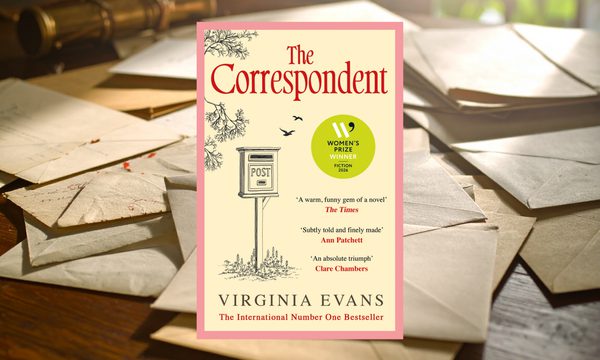
The Times and Sunday Times Cheltenham Literature Festival Announces Women's Prize for Fiction Winner 2026 ‘Big Read' Title
Tuesday 16 June 2026The Times and Sunday Times Cheltenham Literature Festival has today announced Women’s Prize for Fiction winner Virginia Evans’ and The Correspondent as this year’s Big Read title, launching a celebration of reading ahead of the Festival…
Inspiring the Next Generation of Curious Minds
Friday 12 June 2026Last week our Festival Village sparked the curiosity of thousands of Festival-goers with over 100 vibrant talks, explosive demos and creative workshops during Cheltenham Science Festival 2026.